
Chemical injection systems engineered for the weight, space, and environmental demands of offshore service
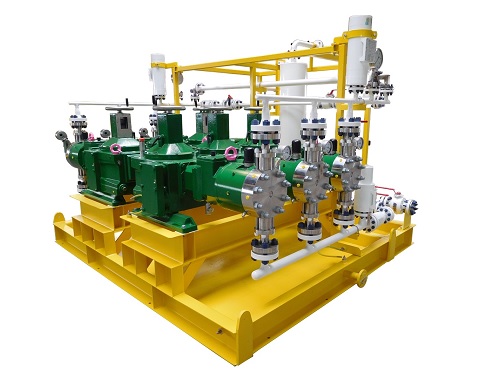
Offshore and subsea injection skids take the same core dosing components, metering pumps, tanks, piping, and controls, and reengineer them around the constraints that platform and subsea installations actually impose, where every kilogram of skid weight and every square meter of deck space carries a real cost. Materials and coatings are selected for continuous saltwater exposure, structural framing is rated for the vibration and motion loads a platform or vessel experiences, and electrical components are specified to the hazardous area classification the installation requires. For subsea applications specifically, the skid may need to operate at depth and pressure for extended periods between interventions, which shifts the design priority toward reliability and minimal maintenance access over serviceability.
What's Included
- Metering pumps rated for offshore hazardous area classification
- Corrosion resistant tank and piping materials suited to marine environments
- Structural frame engineered for platform motion, vibration, and seismic loading
- Pressure and containment design appropriate to topside or subsea installation
- Remote monitoring and control integration for unmanned or limited-access installations
| Specifications | Description |
|---|---|
| Pump Type | Diaphragm or plunger, hazardous area rated |
| Flow Rate Range | 0.1 to 1,000 L/h, application dependent |
| Discharge Pressure | Up to 10,000 psi for subsea injection applications |
| Skid Material | Duplex or super duplex stainless steel frame, marine coated |
| Wetted Parts | 316/duplex stainless steel, selected for chemical and seawater compatibility |
| Hazardous Area Rating | ATEX/IECEx Zone 1 or Zone 2, as required |
| Control Options | Remote PLC monitoring with topside or onshore integration |
| Testing | Factory pressure tested, calibrated, and marine duty certified prior to dispatch |